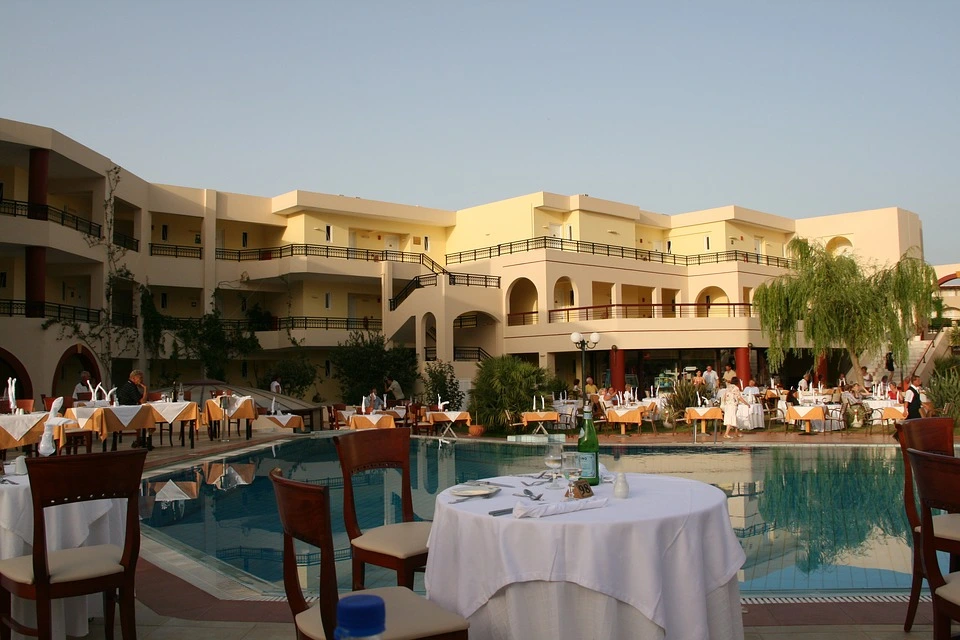
Foreign investors often ask for “the hotel licence” as if it were a single document issued at the end of a project. In Greece it is not. Opening a hotel is a sequence: securing the site, permitting the building, environmental and fire-safety compliance, classification, and finally an online notification of operation to the Ministry of Tourism’s regional service. The old Special Operating Licence (Ειδικό Σήμα Λειτουργίας, often called the “EOT licence”) is no longer issued to new hotels.
Note: this overview reflects the framework in force on 30 October 2026. Tourism and planning rules change frequently and every project must be checked on its own facts.
The legal framework in brief
Three texts set the frame. Law 4276/2014 defines tourism businesses and the types of tourist accommodation, including “main hotel accommodation” such as hotels and organised campsites. Law 4442/2016 sets the general regime under which many business activities start on the basis of a notification rather than a prior licence. Joint Ministerial Decision 11882/2025 (Government Gazette B’ 3340/30.06.2025) applies that regime to tourist accommodation. It provides that wherever Greek legislation refers to the Special Operating Licence, it now means the notification.
The practical consequence is that the State checks after you open, not before. The operator alone is responsible for the accuracy of what is notified. An incomplete file is not a delay; it is a breach, with fines attached.
Step 1: The investment vehicle and tax presence
Before acquiring land or signing a lease, decide who will own the property and who will operate the hotel. They need not be the same entity. Owner/operator structures, management agreements and leases each place regulatory responsibility differently, because the notification is filed by the operator. Every foreign party will also need a Greek tax number (AFM); see our guide to the Greek AFM for non-residents.
Step 2: Site due diligence and planning
The site determines everything that follows. A lawyer and an engineer should confirm, before any binding commitment:
- clean title and, where the Cadastre is operating, a matching cadastral record;
- the applicable land-use and building terms, including whether tourist accommodation is permitted and on what terms (in-plan and out-of-plan areas follow different rules);
- constraints such as the foreshore zone, forest status, archaeological protection or local permit suspensions;
- for existing buildings, whether the structures match their permits or have been legalised.
For acquisitions of operating hotels, our article on buying a hotel in Greece covers the additional checks.
Step 3: Building permit and tourism specifications
New construction, extensions and changes of use require a building permit issued by the competent municipal Building Service (ΥΔΟΜ). The design must meet the technical and functional specifications for the chosen type and category of accommodation; redesign after permitting is costly.
For existing buildings, the notification file accepts either the building permit or, for areas regularised under the Greek legalisation laws (for example Law 4495/2017), the relevant completion certificate.
Step 4: Environmental licensing
Depending on size and location, a hotel will need either a full Decision Approving Environmental Terms (ΑΕΠΟ) or registration under Standard Environmental Commitments (ΠΠΔ). The classification follows the Ministry of Environment’s project categorisation. Where neither is required, the notification file contains the alternative documents provided for hotels. Where the environmental terms require it, proof of connection to the sewerage network is also needed.
Step 5: Fire safety
The threshold is capacity. Accommodation with 51 beds or more (and every campsite) needs a fire-safety certificate from the Fire Service. Below 51 beds, an archived fire-safety study and a log of fire-protection equipment checks are kept on file. A later capacity increase can move a property from one regime to the other.
Step 6: Hotel Chamber registration and star classification
Main hotel accommodation is registered with the Hellenic Chamber of Hotels (ΞΕΕ). The Chamber also issues the star-classification certificate on the basis of a technical report by an accredited inspection body. Law 5170/2025 added a new environmental-performance classification for tourist accommodation. It is mandatory for main hotel accommodation, and its detailed specifications are left to a joint ministerial decision. Investors should ask their engineers how far those rules apply at the time of their project.
Step 7: The notification of operation
Only when the hotel is complete and ready to operate does the operator:
- pay the fee (παράβολο), calculated under Law 4276/2014 by type and capacity, with a separate fee for swimming pools;
- submit the notification through the government system ΟΠΣ-ΑΔΕ (OpenBusiness), also reachable through the EU single point of contact eugo.gov.gr, uploading the supporting documents;
- receive a unique number and timestamp. That record is the proof of lawful start and must be kept on the premises.
The competent authority is the Ministry of Tourism’s Regional Tourism Service (ΠΥΤ) where the hotel is located. For four- and five-star hotels with more than 300 beds it is the Special Service for the Promotion and Licensing of Tourism Investments (ΕΥΠΑΤΕ). The system automatically forwards the notification to the authorities concerned, such as the fire service, health, building and environmental services, the labour inspectorate, the police and, for main hotels, the Hotel Chamber.
The supporting file includes the permit or legalisation certificate, fire-safety and environmental documents, the operator’s sworn declaration of no irrevocable felony conviction, the Hotel Chamber registration and proof of payment. Tourism businesses are also entered in the register of tourism businesses (ΜΗΤΕ) kept by the competent tourism service, and the notification form asks for the ΜΗΤΕ number where one exists.
Step 8: After opening
- Restaurants, bars and pools are declared in the hotel’s notification, but food-and-beverage outlets keep their own licensing. A pool run by a different operator needs its own notification.
- Changes (capacity, category, form) are notified in advance. A change of operator, for example when a management company takes over, must be notified by both the outgoing and the incoming operator within 10 days.
- Inspections are carried out on a sampling basis. Fines for notification breaches range from €500 to €20,000 and are calculated by formula. Operating without an initial notification carries the highest weighting.
Existing hotels: a 2026 deadline
Investors acquiring an operating hotel should check its status under the transitional rules. According to the Ministry’s OpenBusiness guidance, hotels operating under an old Special Operating Licence must register (απογραφή) in the system by 31 December 2026, uploading the licence. Those that notified through the earlier notifybusiness system must complete their data and upload documents by the same date. A target that has not done so is a compliance gap to price into the deal.
How long does it take?
There is no statutory overall timetable. The notification itself is immediate once filed. The time is spent upstream: securing the site, design, permitting, environmental and fire approvals, construction and classification. Each depends on the project’s size, location and the workload of the services involved. Any schedule should be built with the project’s engineers.
Common pitfalls
- Buying land before confirming that tourist accommodation of the intended size is permitted there.
- Designing to residential rather than hotel specifications.
- Filing the notification “to catch the season” before the hotel is complete, which means filing inaccurate data.
- Unlegalised extensions in an acquired hotel that do not match the permit on file.
- Missing the 10-day window for the change of operator after an acquisition.
Konstantinos Tsegas, a lawyer admitted before the Supreme Court of Greece, served as Secretary General of the Greek National Tourism Organisation (EOT) from 2017 to 2019. Read his profile.
Frequently asked questions
Is there still an EOT operating licence for hotels in Greece?
Not for new hotels. Under Joint Ministerial Decision 11882/2025, references to the Special Operating Licence now mean the notification of operation, filed online through the ΟΠΣ-ΑΔΕ (OpenBusiness) system.
Which authority is competent for a new hotel?
The Ministry of Tourism’s Regional Tourism Service where the hotel is located. For four- and five-star hotels with more than 300 beds, the competent authority is ΕΥΠΑΤΕ, the special service for tourism investments.
When can the notification be filed?
Only when the hotel is complete, ready to operate and compliant with the tourism specifications for its type and category, with all supporting documents in place.
Who files the notification, the owner or the operator?
The operator of the hotel files the notification and bears sole responsibility for its accuracy. Owner and operator may be different entities, and a change of operator must be notified by both within 10 days.
How long does it take to open a hotel in Greece?
There is no fixed statutory timetable. The notification is immediate once filed; the time is spent on site checks, design, permits, environmental and fire approvals, construction and classification, which vary by project and location.
Planning a hotel investment in Greece?
We review sites, structures and licensing files for hotel projects and acquisitions. Contact us to discuss the scope of a review for your project, or see our Invest in Greece overview.